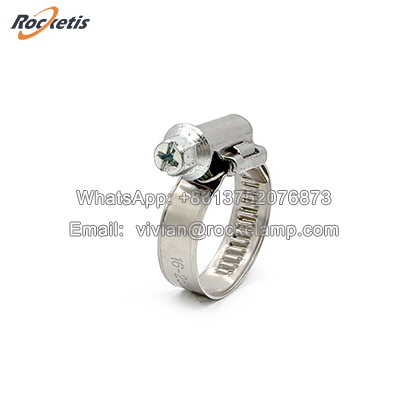
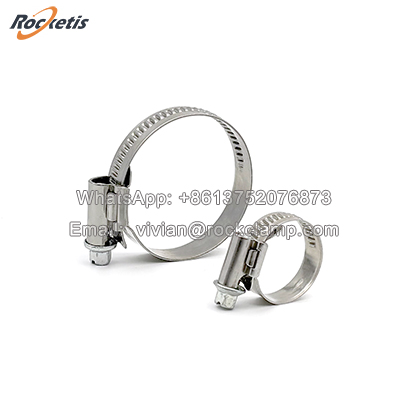
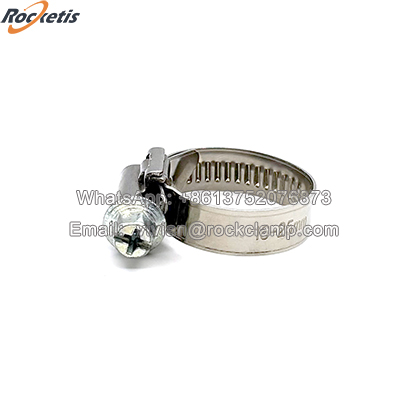
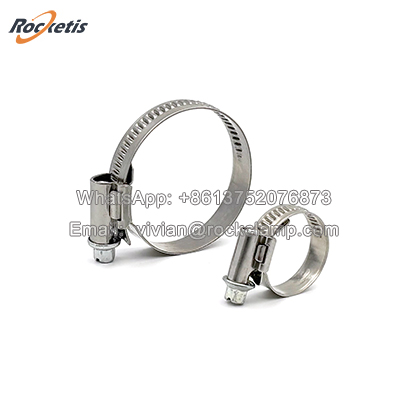
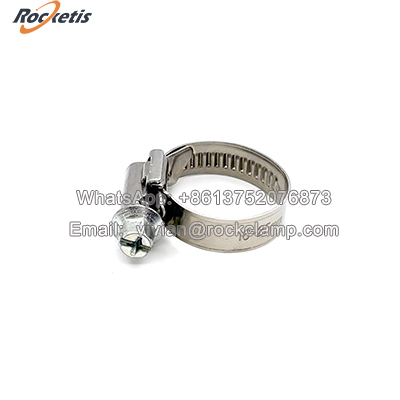
Band width: 9mm /12mm
Material: W4
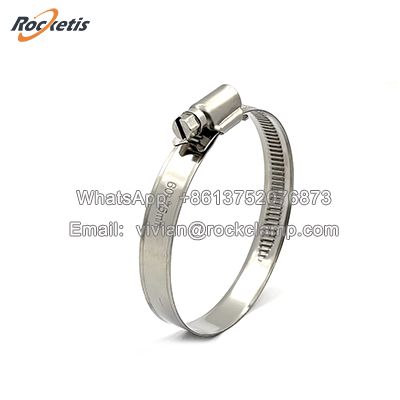
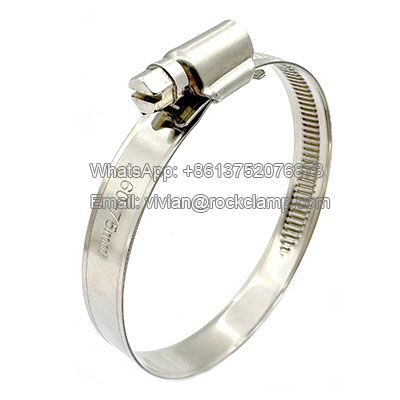
DIN 3017 1 is the foundational section of the German industrial standard that specifies the requirements for the most common and widely recognized type of high-quality worm drive hose clamp. Often referred to simply as a "W2" clamp in industry parlance, it is characterized by its perforated stainless steel band and is considered the benchmark for reliability in demanding applications.
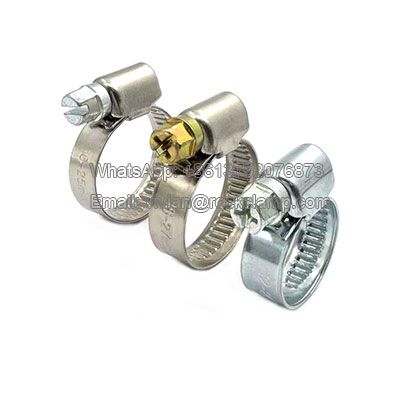
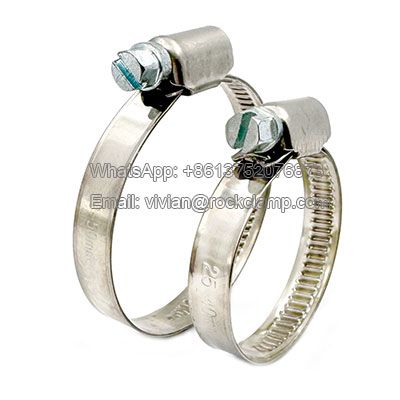
W2 Euro style constant tension clamp is one type of DIN 3017 1 clamps. The W2 German-style Offset Head Hose Clamp is a specific and high-quality variant of the internationally recognized DIN 3017 1 standard worm drive clamp. The "offset head" design is a key feature that differentiates it from standard clamps and provides distinct functional advantages, particularly in tight or hard-to-reach installation spaces.
| Band width | 9mm/12mm |
| Clamping range | from 8-12mm to 280-300mm |
| Screw head | carbon steel screw philp drive, stainless steel screw slot drive |
| Material |
W1 - all parts carbon steel W2 - screw carbon steel, hosing and band stainless steel W4/A2 - all parts stainless steel 201/304 W5/A4 - all parts stainless steel 316 |
Key Features of DIN 3017 1 Clamps
Open Housing Design:
The housing is typically made from stamped stainless steel and has an open design that exposes the worm screw. This differentiates it from the W4 type (covered in other parts of the standard), which has a fully enclosed housing for higher torque.
Despite being open, the housing is robust and designed to withstand significant tightening force.
Materials:
Band, Screw, and Housing: Manufactured from stainless steel as a standard requirement to ensure overall corrosion resistance and prevent galvanic corrosion.
Common Grades:
A2 (1.4301 / AISI 304): Standard grade for excellent general corrosion resistance.
A4 (1.4401 / AISI 316): Premium grade with enhanced resistance to chlorides and acids, mandatory for marine and chemical environments.
Performance & Testing:
DIN 3017 Part 1 mandates rigorous tests to ensure:
High Tensile Strength: The clamp must resist a minimum pulling force without failure.
Pressure Integrity: It must seal effectively without leakage at a specified proof pressure.
Vibration Resistance: The positive-lock mechanism is inherently designed to resist loosening, a critical requirement in automotive and marine applications.
Targeted Application Solutions for DIN 3017-1 Clamps
1. Automotive & engine Systems: High-Vibration Reliability DIN 3017-1 clamps are the standard for turbocharger intercooler pipes and coolant hoses. Their non-perforated band design prevents hose shearing under high vibration, ensuring a permanent, leak-proof seal even during thermal expansion and contraction of engine components.
2. Marine & Offshore Engineering: Maximum Corrosion Resistance In salt-mist environments, standard clamps fail rapidly. Our DIN 3017-1 W4 and W5 series are essential for seawater cooling systems and onboard fuel lines. The full stainless steel construction (AISI 304/316) eliminates galvanic corrosion, significantly reducing maintenance costs for maritime vessels.
3. Industrial Manufacturing: High-Torque Pressure Containment For pneumatic tools and hydraulic return lines, the reinforced housing of the DIN 3017-1 provides the high-torque capability required to contain high-pressure surges. The "short housing" design ensures a uniform 360° distribution of clamping force, preventing localized pressure drops.
4. Food & Chemical Processing: Hygiene and Safety In the chemical industry, leak containment is a safety priority. The smooth internal band surface of our DIN 3017-1 clamps ensures that soft silicone or rubber hoses used in food grade or chemical processing are not punctured or compromised, maintaining a sterile and safe environment.
5. Agricultural Equipment: Heavy-Duty Durability Modern agricultural machinery operates in dusty, muddy, and high-load conditions. The robust worm gear mechanism of the DIN 3017-1 is designed to be clog-resistant, making it ideal for irrigation systems and heavy tractor fuel systems where reliability in harsh fields is non-negotiable.
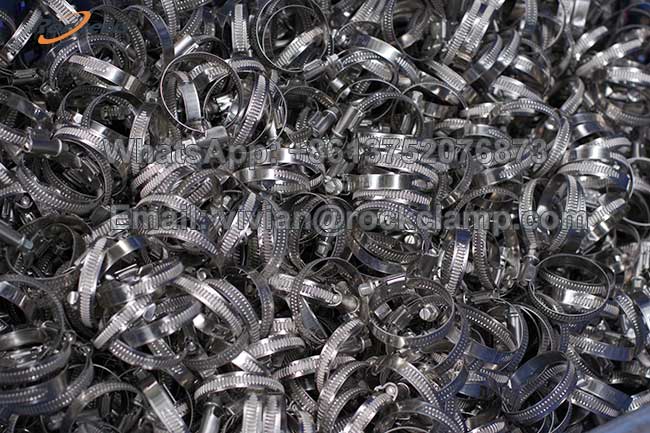
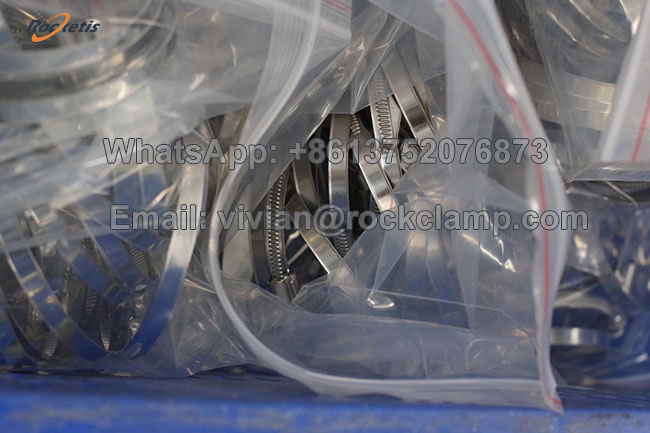
We are a professional hose clamp manufacturer in China with 20 years of industry expertise, dedicated to providing various types, high-quality and cost-effective fastening solutions to global customers.[ read more ]


Contact Person: Vivian Zhang
Tel:862269629980
E-mail: vivian@rockclamp.com
Add:D1-403 Testing and Certification Park, Xiqing District, Tianjin, China